
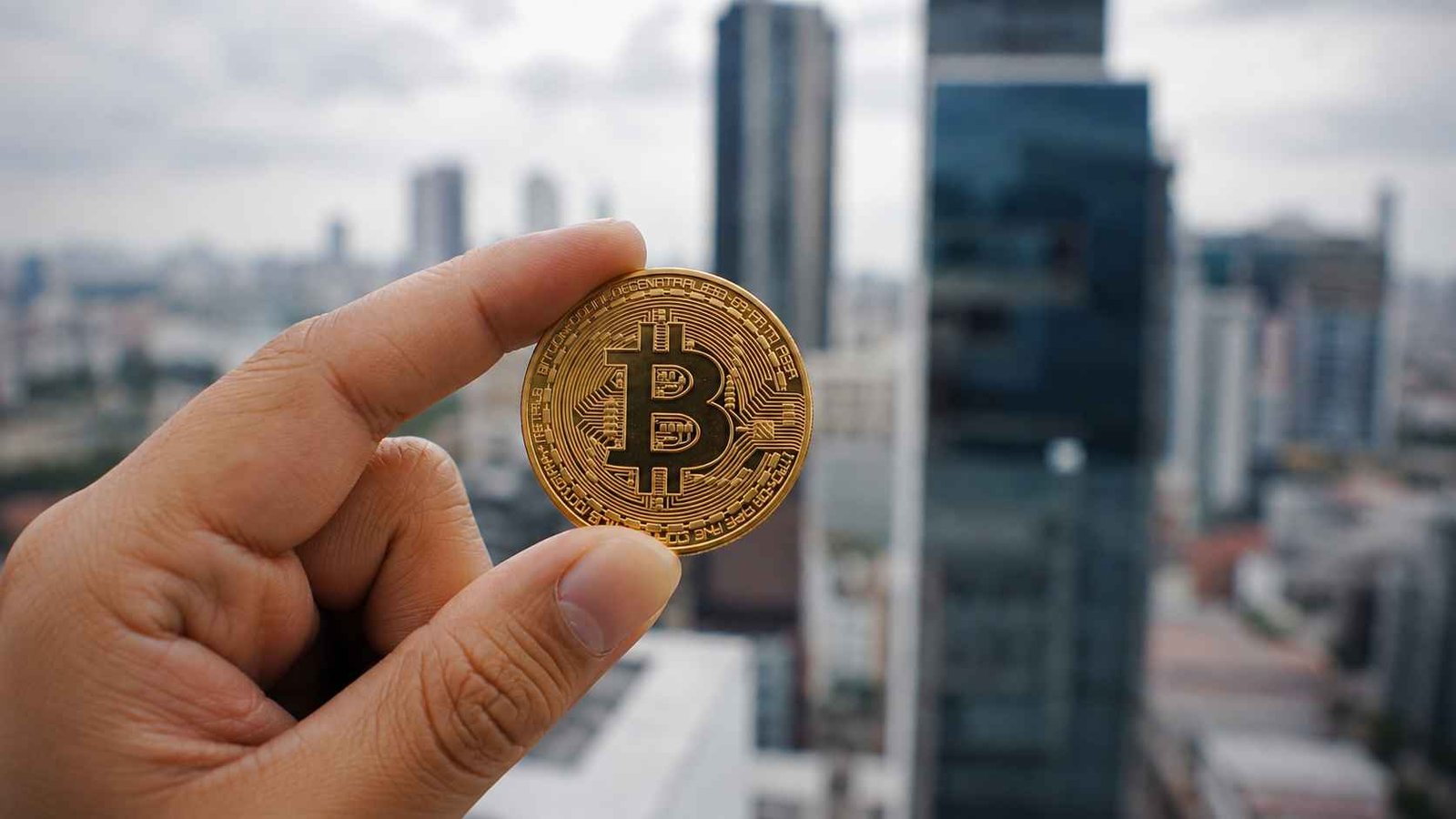
What Is Bitcoin? A Simple Guide to How It Works

Bitcoin is digital money. No bank controls it, no government prints it, and no company owns it.
It runs on a public network of computers that record every transaction on something called a blockchain. Anyone can check that record. Nobody can alter it after the fact.
That’s the short answer. The longer answer, and why it matters to you, takes a bit more explaining.
Where Bitcoin Came From
Trust in banks was falling apart the year Bitcoin showed up.
It was 2009, right after the financial crisis had wiped out savings and jobs worldwide, and banks got bailed out with taxpayer money anyway. Its creator used the name Satoshi Nakamoto, and to this day, nobody knows who that actually is.
Nakamoto’s idea was simple on paper: build money that no single bank, company, or government could control or freeze. A small group of early adopters started trading it for pennies. Today it trades for tens of thousands of dollars.
Nakamoto disappeared from public view around 2010 and hasn’t been heard from since. The project kept growing without them.
How It Actually Works
Picture a shared notebook that millions of computers keep copies of, and every transaction gets written into it the moment it happens.
Nobody can erase a page or sneak in a fake entry. Every computer on the network cross-checks the others, and if one copy gets tampered with, it stands out immediately and gets rejected.
This shared notebook is the blockchain. Transactions get bundled into groups called blocks, and each new block links to the one before it, forming a chain going back to the very first block ever created, in 2009.
You can actually look up any transaction, on any block, right now, if you know where to search. This is why Bitcoin doesn’t need a bank in the middle. The network itself checks the math and keeps everyone honest.
Mining, Simply Explained
Someone has to check all those transactions before they get added to the blockchain.
That job is called mining. Miners run powerful computers that solve a math puzzle, one no person could solve by hand, and it takes raw computing power and a lot of fast guessing.
The first miner to solve it adds the next block of transactions to the chain. As a reward, the network pays them in new Bitcoin. This system has a name: proof-of-work, called that because miners have to prove they did real computational work first.
Why bother with all this? It makes cheating expensive. Faking a transaction would mean out-computing thousands of other machines at once, which costs far more than it’s worth.
Only 21 million Bitcoin will ever exist. Mining slows down on a fixed schedule until the last one gets mined, sometime around the year 2140.
Wallets and Keys
Owning Bitcoin means owning two keys, one public and one private, and mixing them up can cost you everything.
Your public key works like a bank account number. You can share it freely, and people use it to send you Bitcoin.
Your private key is different. It’s closer to the master password to your entire account, except there’s no “forgot password” option and no customer support line to call. Whoever holds it controls the coins. Lose it, and the Bitcoin tied to it is gone permanently, with no bank, company, or government able to get it back for you.
This all gets stored in something called a wallet. Some wallets live on your phone or computer, connected to the internet for convenience. Others, called cold wallets, stay offline on a physical device and are far harder to hack.
Most beginners start with an app-based wallet for small amounts. Larger sums usually move to cold storage.
What Bitcoin Is Used for Today
Not the way it started, that’s for sure.
Bitcoin was built as an idea for everyday payments. Today it’s mostly treated as a store of value, something people hold onto rather than spend, similar to how some people hold gold. Its price moves fast, so few merchants price things directly in Bitcoin.
Real use cases do exist, though. Some companies hold Bitcoin on their balance sheets instead of cash. A growing number of payment platforms let you spend it indirectly, converting to local currency at checkout. Cross-border transfers are another genuine use, since sending Bitcoin can settle faster and cheaper than a traditional wire transfer.
Here’s the live price, so you can see where it’s trading right now.
Watch the chart for five minutes and you’ll learn something words can’t teach. Bitcoin’s price swings hard, in both directions, often within the same day.
The Risks Nobody Skips Lightly
Bitcoin’s biggest strength is also its biggest danger. Nobody can freeze your account, but nobody can undo a mistake either.
Send Bitcoin to the wrong address, and it’s gone. There’s no bank to call, no fraud department, no chargeback button.
Scammers know this, and 2026 has brought sharper tactics than ever. Fake livestreams using AI-generated deepfakes of well-known figures promise to double any Bitcoin sent to them. None of it is real. Phishing works the same way, through fake exchange websites copied pixel for pixel, tricking people into typing in their private key or recovery phrase. Once typed, the funds are already gone.
Then there’s plain volatility. Bitcoin can drop 20 percent in a week and climb just as fast, and anyone putting in money they can’t afford to lose is taking on real risk, not a small one.
Regulation adds another layer of uncertainty, since rules differ by country and keep shifting.
None of this means Bitcoin is a scam itself. It means the responsibility for safety sits entirely with the person holding it, which is very different from how a bank account works.
Is It Worth Understanding or Considering?
Depends entirely on what you’re looking for.
Bitcoin isn’t built to replace your everyday checking account. If you’re curious about how money is changing, understanding it is worth your time regardless of whether you ever buy any, since it’s shaping conversations in banking, tech, and even government policy.
If you’re thinking about buying some, treat it the same way you’d treat any high-risk asset. Only use money you could genuinely afford to lose without it affecting your life. A common approach some investors mention is keeping crypto to a small slice of a wider portfolio, not the whole thing, so a bad month in Bitcoin doesn’t wreck their finances overall.
This isn’t investment advice, and nobody can predict where Bitcoin’s price goes next.
Where This Leaves You
Strip away the jargon, and Bitcoin isn’t complicated.
It’s a shared, tamper-proof record of who owns what, kept honest by thousands of computers instead of one bank. Whether that’s useful to you depends on what you’re trying to do. Some people hold it as a long-term bet, some use it for fast cross-border transfers, and plenty just want to understand it without ever buying any.
Whatever your reason for reading this, you now know how it actually works, not just what people say about it online.
Frequently Asked Questions
Is Bitcoin real money? Bitcoin functions as money in the sense that people use it to store value and make payments. It isn’t issued by any government, so it isn’t legal tender everywhere.
Can Bitcoin be hacked? The Bitcoin network itself has never been hacked. Individual wallets and exchanges get hacked regularly, which is why key security matters so much.
How many Bitcoins exist? Only 21 million Bitcoin will ever exist. Most of that supply has already been mined, with the rest released gradually until around 2140.
Do I need to buy a whole Bitcoin? No. Bitcoin can be divided into tiny fractions, so you can buy a small amount for as little as a few dollars.
Is Bitcoin legal? Legality varies by country. Some countries fully allow it, some restrict it heavily, and a few have banned it outright.
What happens if I lose my private key? The Bitcoin tied to that key becomes permanently inaccessible. There’s no recovery option, which is why backing up your key safely matters so much.
